
Traditional marketing
Advertising that existed in offline channels before the internet arrived — billboards, printed advertisements and radio spots — is what we call traditional marketing.
Because information was not easily available to the public, most of it leaned on outbound tactics such as print advertising, television commercials and billboards.
Outbound marketing
Outbound marketing is promotion of the kind that sends cold calls, text messages and emails without asking whether the audience wanted any of it. That is why it picked up the name interruption advertising.
The effort here goes into pushing the message out: sending customers a note that raises awareness of your products or services, regardless of how interested the consumer actually is.
Inbound marketing
Inbound marketing is about attracting customers instead of interrupting them. Most of its tactics fall under digital marketing, and it assumes the customer researches the purchase online, on their own schedule.
This kind of marketing stands on three main pillars: attract, engage and delight.
The first job is attraction, and strong content plus valuable experiences told in the audience’s own language pull people toward your business. Next, keep them engaged through channels such as email marketing and chatbots, and make that contact worth their time. Then stay consistent over the long run; positioned as an advisor and a specialist, you earn their trust.
Digital marketing
Unlike the traditional form, digital marketing uses technologies that did not exist before so it can reach audiences in new ways. It turns marketing effort into something that lives online.
Businesses use digital channels — search engines, websites, email and social media — to advertise and to stay in touch with current and potential customers.
Search engine marketing
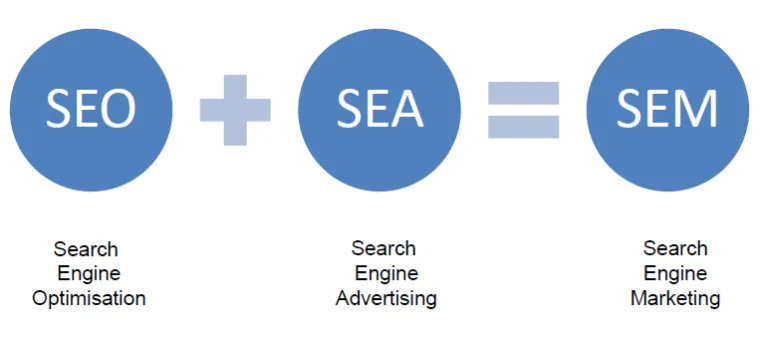
Search engine marketing, or SEM, covers every strategy used to make sure your business is visible on search engine results pages (SERP). With SEM you can arrange for your business to show up in first position when someone searches a specific keyword.
Inside that umbrella there are several forms of SEM: search engine optimization (SEO) for organic results, and pay-per-click (PPC) advertising for sponsored search results.
Pay-per-click SEM means bidding on keywords so your ads get placed, through platforms such as Google Ads. Ad management tools exist for building and running those PPC campaigns as well.
Content marketing
Our aim in marketing is to attract an audience. One of the best ways to get there is to produce strong, genuinely useful content that wins users over.
Content marketing means creating, publishing and distributing that material as text, audio, images and video for customers, through channels such as social networks and online spaces, blogs, ebooks, webinars, even brochures and catalogs, and putting it in front of the public. The purpose is to help people along the buyer’s journey. Start by identifying the questions and the worries your buyers have before they are ready to purchase.
Social media marketing
Social networks are drawing far more attention these days.
On platforms such as Facebook, Instagram, LinkedIn and Twitter, brands can promote the business and reach their audience in a more personal way.
With social media, two things decide success: relevant content and consistency.

Nobody opens a social network looking to buy something, so you have to balance promotion and entertainment. Eye-catching images and captions that encourage your audience to like, share and comment bring the brand much closer to winning customers.
Video marketing
According to a 2021 Wyzowl study, 87% of marketers say that using video in their marketing strategy has a positive return, because internet users watch a huge volume of different videos every day.

Whether the video is for your website, your YouTube channel, your email list or your social following, it can raise brand awareness, drive conversions and close deals.
Some video marketing programs even let you analyze, nurture and score leads based on how they act on the video.
Voice marketing
Voice marketing uses smart speakers such as Amazon Alexa and Google Home to add value for the audience and answer questions about the topics they care about.
Besides optimizing your website for voice search with the right keywords, you can get creative by building a Google Home action or an Alexa skill.
Email marketing
Email marketing connects brands to leads, prospects and customers through the inbox. Email campaigns can build brand awareness, send traffic to other channels, promote products or services, or nurture leads toward a purchase.
Email regulations such as the General Data Protection Regulation and the CAN-SPAM Act require brands to follow responsible business email practices, which come down to three principles:
1. Email only the people who expect to hear from you — in other words, the ones who opted in.
2. Make unsubscribing easy for subscribers.
3. Be clear about who you are when you reach out.

With that in mind, the first thing to do is set the strategy for how you build your email list — the database of contacts you are allowed to send to. The most common route is lead capture forms on your website.
Then you need email marketing software and a CRM to send, track and monitor how those emails perform. To move the strategy forward and get the most out of it, look at email automation software too, which fires messages off based on triggers you define.
Conversational marketing
Meet customers how, when and where they want to be met. This goes beyond live chat and extends to phone calls, SMS, Facebook Messenger, email, Slack and other channels.
It is the fastest way to move people through your marketing funnel and, with the power of a real conversation, turn them into customers.
Buzz Marketing
It is a viral marketing strategy that uses creative content, interactive events and community influencers to generate word of mouth and anticipation for the product or service a brand is about to release.
Buzz marketing works best when you contact influencers early and have a plan for creating noise around the brand. To keep track of your own effort, invest in social listening software so you stay in touch with how your audience is reacting.
Influencer marketing
This type is designed around an existing community of engaged followers on social media. Influencers are treated as experts in their niche, and they have built the loyalty and trust of the audiences you may be trying to reach.
To start, build your influencer strategy first and decide what kind of influencer you need. Then set the criteria an influencer has to meet so they line up with your strategy and budget. The factors to weigh include their niche, their audience size and their current metrics. From there you can find influencers and reach out:
Manual outreach on social media
Working with an influencer marketing platform
Hiring an agency to do the research and the briefing for you
Acquisition marketing
With any marketing strategy the goal is to attract customers and keep them. Each of these types of marketing, though, concentrates on one particular stage of the buyer’s journey. Acquisition marketing works the acquire and convert stages, turning strangers into qualified sales leads.
What separates it from the other types is that it reaches past the marketing team and often means working with customer service and customer success. Why? Because happy customers are the loudest promoters you have.
It can involve several tactics for turning a website into a lead generation machine, including freemium offers, learning hubs, holding on-page copy to a higher standard, conversion rate optimization and lead optimization.
It may even include a lead optimization and nurturing strategy to close that gap.
Contextual marketing
Contextual marketing targets online users with different ads on websites and social media networks based on their browsing behavior. The number one way to strengthen those efforts is personalization.
A CRM paired with powerful marketing tools, such as smart CTAs, can make a website feel more like a choose-your-own-adventure story: the user finds the right information and takes the right action far more effectively.
Personalized marketing
The goal here is a tailored marketing experience for every user who comes across your brand.
That can be as simple as putting a first name in the email subject line or sending product recommendations based on past purchases. Software products such as Versium Reach let marketers target B2B or B2C customers with powerful audience insights.
It can sound a little unsettling, but most consumers accept it when the payoff is a better buying experience. A 2019 SmarterHQ study reported that 79% of consumers felt brands knew too much about them. Still, 90% of them were willing to share information about their behavior and preferences for a cheaper, easier and more enjoyable buying journey.
Brand marketing
Brand marketing is shaping how the public understands your brand and building an emotional connection with your target audience through storytelling, creativity, humor and inspiration.
The aim is to be thought-provoking and to start a conversation, so the brand gets remembered and tied to positive feelings. To begin, understand your buyer persona deeply and what actually resonates with them. You also have to consider where you stand in the market and what makes you different from competitors. That shapes your values and what you stand for, and gives you material for storytelling campaigns.
Stealth marketing
Stealth marketing happens when brands promote products or services to customers who have no idea they are being marketed to. You are watching a television program and notice a branded product built into the shot — that is the classic example. Before influencers were covered by advertising disclosure rules, they often used this style to promote sponsored products.
For it to work, brands have to find opportunities that line up with their identity and their values.
Guerrilla marketing
Guerrilla marketing places bold activations and clever brands in different high-traffic locations so the promotion spreads further than paid media would.
Examples include altering urban environments in public space, advertising during a live event without the sponsors’ or organizers’ permission, public stunts and treasure hunts.
It can be a cost-effective way to get attention. It also has the potential to go wrong, though, if the audience misreads it or weather, law enforcement or other factors outside the brand’s control shut it down.
Native advertising
Native advertising happens when brands tailor their promotion to match the feel, look and function of the platform it is published on.
Companies and brands partner with publishers to create the piece and win the support of its audience. The goal is to lift engagement or build the brand by borrowing editorial expertise and producing advertising that does not disrupt the reading experience.
Affiliate marketing
An affiliate relationship is one where a business pays another brand — the affiliate partner, or affiliate — a commission for every purchase that comes through that partner’s promotional tactics.
The same relationship is set up the other way round: a business teams with another brand, called the affiliate partner or affiliate, which earns a commission for each purchase completed through its promotional activity.
It is popular among influencers, but brands can use it as well to promote products or services that fit their own brand.
If you can get good performance out of assets you already own, such as a website that produces leads or active social accounts, this is an excellent way to grow those assets. Pick a product or brand that lines up with what you sell but does not compete with you, and promote it to your audience.
When your existing assets — a lead-generating website, an active social presence — can carry it properly, they become a very good route to further growth. Choose a product or brand aligned with what you sell, but not a competitor of yours, and put it in front of your audience.
Brand partnership
Co-branding is collaboration between brands in which they carry one shared campaign and split the results. It is an excellent lead generation tool because it gives each brand access to the other’s potential audience.
For partnerships like this to work, the brands have to align on purpose, with products or services whose personas are complementary and similar.
Product marketing
Product marketing is far more than it looks from outside. It is not just photographing the product and launching a campaign. It builds awareness of a product and adoption of it through positioning, rollout and market research.
Product marketers sit at the intersection of the product, sales, marketing and customer success teams, and work with all of them to coordinate sales enablement and design strategy.
Account-based marketing
Account-based marketing (ABM) is a marketing strategy so focused that teams treat a single customer or account as its own market. Marketing creates content, hosts events and runs complete campaigns addressed to the people connected to that one account, not to an entire industry.
The strategy lets brands design personalized campaigns for their ideal customers and spend time and resource on accounts that already show high-intent behavior.
Customer marketing
Unlike acquisition marketing, where the focus is on winning new customers, customer marketing concentrates on keeping the ones you already have. The end goal is to make customers happy with your product or service and with the support around it, so they become advocates for the brand. Acquiring a customer costs far more than retaining one or selling more to an existing customer, so brands gain real value from investing in this type of marketing.
That said, it depends on continuously improving the customer experience — the impression that stays with the customer after the service has been delivered.
Simple ways to do that include removing friction from the customer service process, offering self-service resources such as online knowledge bases, and using customer service software to manage and automate interactions.
Here you are finding and delivering marketing messages that target each customer’s exact requirements. This type of marketing pays off equally for you and for the people you serve.
Omid Bodagh

I am an SEO specialist who likes helping businesses get seen on Google. From WordPress to SEO, whatever an online business needs to grow, I can help with it.